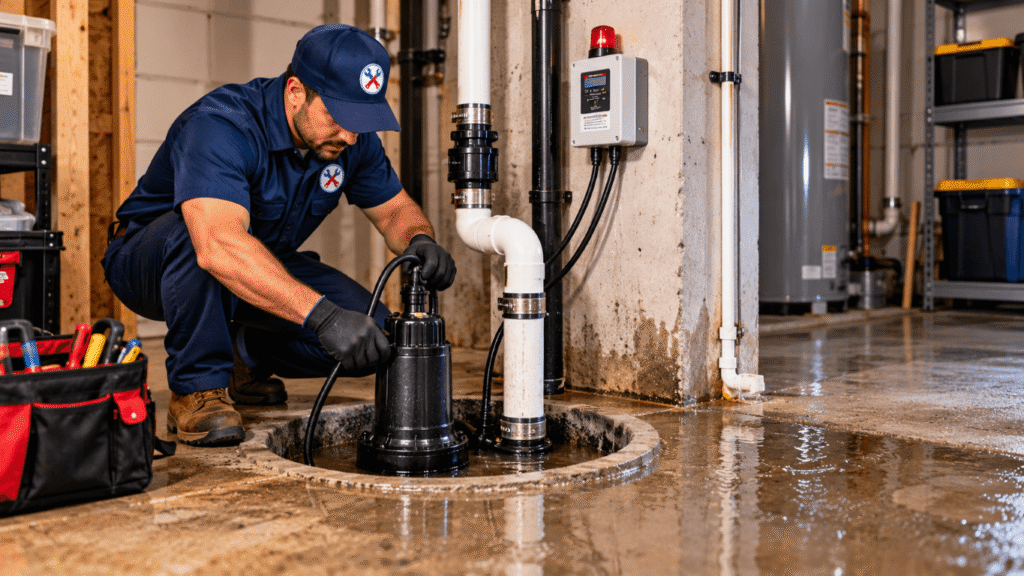
Pumps that move water and waste where gravity can’t, with backups for when the power goes out.
on Google, Facebook and Yelp
RMP #36632
serving the Gulf Coast
on every job
Not every drain can flow downhill to the sewer. Garage and outbuilding bathrooms, drainage pits, elevator pits and low commercial spaces often rely on a sump or sewage ejector pump. When that pump fails, water or sewage stays right where it is.
We install, repair and replace pumps, add high-water alarms, and set up battery or water-powered backups so a storm power outage doesn’t turn into a flooded floor.

If any of these sound familiar, the clog is already bigger than it looks.
A sump pump that runs nonstop or fails to start may have a faulty switch, motor, or electrical connection.
A high-water alarm signals that water levels are rising, potentially indicating pump failure or a blocked discharge line.
Older sump pumps may be less reliable and could benefit from inspection or replacement to prevent unexpected flooding.
Unusual grinding or rattling noises may indicate worn bearings, damaged components, or debris interfering with the pump.
Standing water or sewage in the pit may indicate a failed pump, clogged line, or drainage system malfunction.
Without a backup system, power outages during storms can leave your basement vulnerable to flooding and water damage.
Call M&M Plumbing for honest answers, a free estimate and a licensed master plumber on the job.
Check the pump, float, check valve and discharge line.
Properly sized pump for the job.
High-water alarm and backup system options.
Fill the pit and watch a full cycle.
Usually 7 to 10 years, less if they run constantly.
Not always. Rerouting the line overhead often avoids touching the slab at all.
If a failure would flood living space or stop a business, yes. Storm outages are common here.
Pinpoint leaks under your foundation and fix them with minimal damage